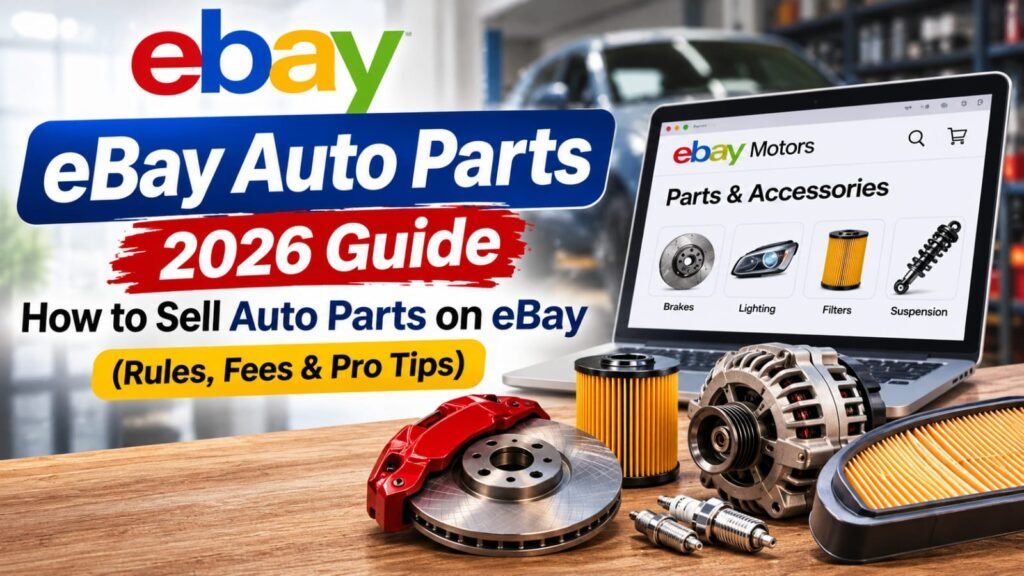
Selling eBay auto parts can be a profitable opportunity for sellers who understand product demand, vehicle compatibility, pricing, and shipping requirements. From replacement headlights and side mirrors to engine components and interior accessories, eBay provides a marketplace where buyers search for new, used, and refurbished automotive parts.
However, successfully selling auto parts on eBay requires more than simply uploading product photos. Sellers need to choose the correct eBay Motors Parts & Accessories category, provide accurate vehicle fitment information, describe product condition clearly, and calculate selling fees before setting their prices. A small mistake in compatibility details or shipping estimates can lead to returns, unhappy buyers, and reduced profit.
In this 2026 eBay auto parts selling guide, you’ll learn how to research profitable parts, create accurate listings, use vehicle compatibility information, estimate shipping costs, understand applicable selling fees, and avoid common mistakes. Whether you’re selling spare parts from a personal vehicle or building an automotive parts business, this guide will help you approach the process with greater confidence.
What Are eBay Auto Parts?
eBay auto parts refers to automotive replacement parts, components, and accessories that buyers can find through eBay’s marketplace, particularly its eBay Motors Parts & Accessories categories. These products range from small maintenance items to larger mechanical and body components for cars, trucks, motorcycles, and other supported vehicles.
Sellers can offer new, used, or refurbished automotive parts, provided their listings comply with eBay’s applicable policies and accurately describe the item’s condition. Buyers often search for specific parts using vehicle details, manufacturer part numbers, brand names, or compatibility information.
Common categories of auto parts sold on eBay include:
- Engine and Mechanical Parts: Alternators, starters, sensors, and other replacement components.
- Exterior Body Parts: Bumpers, headlights, mirrors, grilles, and trim.
- Interior Parts: Dashboard components, switches, seat accessories, and control panels.
- Brakes and Suspension: Brake components, shock absorbers, struts, and suspension parts.
- Electrical Components: Wiring harnesses, switches, modules, and compatible electronic parts.
- Maintenance Parts: Filters, belts, spark plugs, and other routine replacement items.
For sellers, the key to success is not simply choosing a popular product. It is identifying genuine buyer demand, confirming vehicle compatibility, describing the part accurately, and accounting for all selling expenses before listing.
How to Sell Auto Parts on eBay: Step-by-Step Guide
Selling auto parts on eBay involves choosing the right products, researching buyer demand, creating accurate listings, and managing orders efficiently. Following a structured process can help sellers reduce compatibility mistakes, control costs, and provide a better buying experience.
Step 1: Research Auto Parts Before Listing
Before listing automotive parts, research which products buyers are actually purchasing on eBay. A part may appear popular, but that does not necessarily mean it sells frequently or generates a reasonable profit.
Start by searching for the exact part name, manufacturer part number, or vehicle model. Then review relevant sold listings to understand recent selling prices and buyer demand.
During your research, pay attention to:
- Sold Prices: Compare actual selling prices rather than relying only on active listing prices.
- Product Condition: Separate new, used, and refurbished parts when comparing prices.
- Part Numbers: Check OEM or manufacturer part numbers to identify comparable products.
- Vehicle Compatibility: Look for the specific makes, models, years, and configurations supported by the part.
- Competition: Review similar listings to understand pricing, photos, shipping offers, and product descriptions.
- Estimated Profit: Consider sourcing costs, applicable eBay fees, packaging, shipping, and potential returns.
For deeper research, eBay’s Product Research tool can help eligible sellers analyze historical sales information and pricing trends.
Helpful Resource: Learn how to find sold items on eBay to research actual selling prices before creating your listings.
The goal is to identify parts with demonstrated demand, accurate compatibility information, manageable shipping requirements, and enough potential margin to justify selling them.
Step 2: Choose the Correct eBay Motors Parts & Accessories Category
Choosing the correct category is an important part of selling eBay auto parts. A relevant category helps buyers find your products through eBay’s search and browsing features and may determine which item specifics and vehicle compatibility options are available.
When creating a listing, start by searching for your automotive part using its exact name or manufacturer part number. Review eBay’s suggested categories, but confirm that the selected category accurately matches the product.
For example:
- Headlights and Taillights: Select the appropriate automotive lighting category.
- Engine Components: Choose the relevant engine parts category based on the specific component.
- Mirrors and Exterior Parts: Use the appropriate exterior parts category.
- Brake Components: Select the relevant braking system category.
- Interior Accessories: Choose the category that best matches the item’s intended use.
Important: Category names and available listing features may vary by eBay marketplace and product type. Always check the current category options during the listing process.
Avoid selecting an unrelated category simply because it appears to have more traffic. Incorrect categorization can make listings harder to discover and may create problems with product details or buyer expectations.
Once you have selected the appropriate category, complete all relevant item specifics, including brand, manufacturer part number, condition, and other applicable product attributes.
Step 3: Add Accurate Vehicle Compatibility and Fitment Information
Vehicle compatibility, also known as parts fitment, is one of the most important details when selling eBay auto parts. Buyers need to know whether a replacement part will fit their specific vehicle before making a purchase.
A part that fits one model year may not fit another, even when the vehicles look nearly identical. Differences in engine size, trim level, production date, drivetrain, or regional specifications can affect compatibility.
When creating a listing in an eligible eBay Motors Parts & Accessories category, use eBay’s available vehicle compatibility features to provide accurate fitment information.
Check the following details before adding compatibility information:
- Vehicle Make: The manufacturer, such as Ford, Toyota, or Honda.
- Vehicle Model: The exact model the part is designed for.
- Model Year: The supported production or model years.
- Engine and Trim: Relevant engine configurations, trim levels, or vehicle variants.
- Manufacturer Part Number (MPN): The part number supplied by the manufacturer.
- OEM Part Number: The original equipment reference number, when applicable.
- Additional Fitment Notes: Important restrictions, such as left-hand versus right-hand drive or specific production dates.
Never guess compatibility information or assume that visually similar parts are interchangeable.
Example: Vehicle Fitment Information
The following table illustrates how sellers can organize vehicle compatibility details before creating a listing. These are fictional examples for demonstration only and do not confirm that any particular part fits the vehicles shown.
| Vehicle Make | Model | Year | Fitment Detail to Verify |
|---|---|---|---|
| Toyota | Camry | 2020 | Engine and trim |
| Honda | Civic | 2019 | Body style and engine |
| Ford | F-150 | 2021 | Engine and drivetrain |
| BMW | 3 Series | 2018 | Chassis and production date |
Important: The examples above are for illustration only. Always verify actual fitment using reliable manufacturer documentation, part numbers, and the compatibility information available in eBay’s listing tools.
Accurate fitment information helps buyers evaluate whether a part is suitable for their vehicle and may reduce avoidable returns caused by compatibility misunderstandings. However, compatibility features do not replace the seller’s responsibility to provide accurate product information.
Step 4: Create an Accurate Auto Parts Listing with Photos and Item Specifics
Creating a detailed and accurate listing is essential when selling eBay auto parts. Buyers often search for replacement components using specific part numbers, vehicle models, brands, and product conditions. A well-structured listing helps them understand exactly what they are purchasing.
Follow these best practices when creating your automotive parts listing.
Write a Clear, Search-Friendly Title
Include the most relevant product details, such as the brand, part name, manufacturer part number, and verified vehicle compatibility.
For example, a listing title might follow this structure:
Brand + Part Name + Part Number + Verified Vehicle Details + Condition
Avoid keyword stuffing, misleading compatibility claims, or adding vehicle models that the part has not been verified to fit.
Upload High-Quality Product Photos
Use clear, original photographs showing the actual item whenever possible. Include:
- Front, back, and side views of the part.
- Close-up photographs of manufacturer labels and part numbers.
- Images showing connectors, mounting points, and important details.
- Clear photographs of scratches, wear, damage, or missing components.
- A photo showing all included accessories or hardware.
For used auto parts, photographs should accurately represent the item’s current condition.
Having trouble uploading listing images? Read our guide on eBay photos not uploading for practical troubleshooting steps.
Complete Relevant Item Specifics
Provide accurate information in all applicable fields, including:
- Brand and manufacturer.
- Manufacturer Part Number (MPN).
- OEM reference number, where applicable.
- Product condition.
- Placement on vehicle, such as front, rear, left, or right.
- Material, color, or other relevant specifications.
- Verified vehicle compatibility.
Describe the Part’s Condition Honestly
Clearly explain whether the item is new, used, or another condition supported by the selected eBay category. For used parts, disclose known defects, previous repairs, missing accessories, and relevant testing information.
Do not describe an untested component as fully functional unless you have reliable evidence supporting that claim.
Explain What Buyers Will Receive
Specify whether the listing includes a single component, a pair, mounting hardware, wiring, or additional accessories.
Accurate listing information can reduce misunderstandings and help buyers make more confident purchasing decisions.
Step 5: Set Competitive Prices and Calculate eBay Auto Parts Selling Fees
Setting the right price is essential when selling eBay auto parts. A competitive price can help attract buyers, but sellers must also account for marketplace fees, product costs, shipping expenses, and other charges to avoid reducing their profit margins.
Start by reviewing comparable sold listings for the same automotive part. Compare the manufacturer part number, condition, vehicle compatibility, and included accessories before deciding on a listing price.
Consider These Costs Before Setting Your Price:
- Product Cost: The amount paid to purchase or source the automotive part.
- Final Value Fees: eBay selling fees that vary depending on the applicable marketplace, product category, and seller circumstances.
- Per-Order Fees: Additional charges that may apply when an order is completed.
- Promoted Listings Fees: Advertising expenses, if you choose to promote your listing.
- Shipping Costs: Carrier charges, packaging materials, and any additional shipping-related expenses.
- Return-Related Costs: Potential expenses associated with returns, damaged products, or incorrect fitment.
Example: Calculate Your Auto Parts Profit
Suppose you sell a replacement automotive component for $100.
| Expense | Amount (USD) |
|---|---|
| Selling Price | $100.00 |
| Product Cost | $35.00 |
| Shipping and Packaging | $12.00 |
| Illustrative eBay Fees | $14.00 |
| Advertising Cost | $5.00 |
| Estimated Net Profit | $34.00 |
Note: This is a hypothetical example, not an official eBay fee calculation. Actual fees and profits vary by marketplace, category, transaction details, and seller expenses.
Profit Formula:
Net Profit = Selling Price − Product Cost − eBay Fees − Advertising Costs − Shipping and Other Expenses
Before publishing a listing, estimate your total selling costs and check whether the expected profit justifies the time and effort required to fulfill the order.
For a more detailed estimate, use an eBay Fee Calculator to evaluate applicable fees and potential profit before setting your selling price.
Step 6: Choose the Right Shipping and Packaging for Auto Parts
Shipping automotive parts requires careful planning because products vary significantly in size, weight, shape, and fragility. Small components such as sensors and switches may be relatively easy to ship, while bumpers, wheels, engines, and other heavy parts can involve higher costs and special handling requirements.
Before listing eBay auto parts, estimate shipping expenses and choose a delivery method appropriate for the product.
Measure and Weigh the Packaged Item
Measure the complete package rather than the product alone. Shipping carriers may calculate charges using actual weight or dimensional weight, depending on their pricing rules.
Record the package’s:
- Length, width, and height.
- Total weight, including protective packaging.
- Destination and available carrier services.
- Potential oversized-package or additional-handling charges.
Use Protective Packaging
Choose packaging materials based on the item’s size, weight, and fragility.
- Small Components: Use sturdy boxes and appropriate cushioning.
- Fragile Parts: Protect headlights, mirrors, and other breakable components from movement and impact.
- Heavy Components: Use packaging rated for the item’s weight and secure it against shifting.
- Irregularly Shaped Parts: Protect exposed edges, mounting points, and delicate surfaces.
Some automotive components, including certain batteries, fluids, airbags, and fuel-system parts, may be subject to carrier restrictions, hazardous-material rules, or eBay listing restrictions. Check the applicable requirements before offering these items for sale or shipment.
Choose an Appropriate Shipping Service
Compare available shipping services based on package dimensions, weight, destination, delivery expectations, tracking, and total cost.
For large or unusually heavy components, freight shipping or local pickup may be more suitable when permitted and supported by the listing.
Set Clear Shipping Expectations
Clearly communicate handling times, shipping charges, delivery options, and any relevant restrictions in your listing.
Use accurate package information when purchasing shipping labels and upload valid tracking details when available.
For more guidance on shipment updates and delivery confirmation, read our eBay Tracking Guide.
Careful shipping preparation helps sellers control expenses, reduce avoidable damage, and provide buyers with more reliable delivery expectations.
Step 7: Handle Returns and Avoid Vehicle Compatibility Disputes
Returns are an important consideration when selling eBay auto parts, particularly because buyers may purchase components that do not fit their vehicles or meet their expectations.
Even when a seller provides accurate product information, a buyer may request a return because of incorrect fitment, an installation problem, damage during shipping, or a mismatch between the item and its description.
Understand eBay’s Return Rules
Return responsibilities depend on the reason for the return, the seller’s stated return policy, and applicable eBay buyer protection rules.
For example:
- Item Not as Described: If a part arrives damaged, defective, or materially different from the listing, the seller may be responsible for accepting the return and covering return shipping under applicable eBay rules.
- Buyer Ordered the Wrong Part: If the listing was accurate but the buyer selected an incompatible part, the outcome may depend on the seller’s return policy and applicable marketplace rules.
- Incorrect Compatibility Information: If a seller provides inaccurate fitment details, the buyer may have grounds to request a return because the item does not match the description.
- Shipping Damage: Sellers should respond promptly, review available evidence, and follow applicable return and shipping procedures.
How to Reduce Compatibility-Related Returns
Before publishing an auto parts listing:
- Verify manufacturer and OEM part numbers.
- Use accurate vehicle compatibility information.
- Explain important fitment limitations.
- Include clear photographs of connectors and mounting points.
- Disclose defects, missing components, and testing limitations.
- Avoid guaranteeing compatibility without reliable supporting information.
Respond Professionally to Return Requests
When a buyer opens a return request, review the stated reason and respond within eBay’s required time frame. Keep communication and return processing within eBay’s supported systems, and follow the applicable marketplace policies. Maintaining accurate listings and handling returns consistently can help reduce avoidable disputes and protect the buyer experience. For detailed instructions on managing buyer return requests, read our eBay Returns and Refunds Guide.
Common eBay Auto Parts Selling Mistakes to Avoid
Selling eBay auto parts requires careful attention to product accuracy, vehicle compatibility, pricing, and order fulfillment. Even experienced sellers can make mistakes that lead to unnecessary returns, reduced profits, or dissatisfied buyers.
Here are some common mistakes to avoid when listing automotive parts on eBay.
Listing Parts Without Verifying Compatibility
One of the most common mistakes is assuming that a part fits multiple vehicles simply because the components look similar.
How to avoid it: Verify manufacturer part numbers, vehicle specifications, and fitment restrictions before adding compatibility information to your listing.
Using Incorrect or Incomplete Part Numbers
Buyers frequently search for automotive components using OEM or manufacturer part numbers. Incorrect numbers can attract the wrong buyers or create confusion.
How to avoid it: Check the actual product label and reliable manufacturer documentation before entering part numbers.
Underestimating Shipping Costs
Large or heavy automotive components may involve dimensional-weight charges, oversized-package fees, or special handling requirements.
How to avoid it: Measure and weigh the fully packaged item before calculating your selling price.
Hiding Damage or Product Defects
Failing to disclose scratches, broken mounting points, missing accessories, or untested functionality can result in buyer complaints and return requests.
How to avoid it: Use clear photographs and explain the item’s condition accurately.
Ignoring eBay Fees and Profit Margins
A product may generate sales without delivering a reasonable profit after marketplace fees, shipping, advertising, and sourcing costs.
How to avoid it: Calculate estimated net profit before listing and review your actual expenses after each sale.
Using Misleading Listing Titles
Adding unrelated vehicle models, unsupported compatibility claims, or excessive keywords may attract irrelevant traffic and confuse buyers.
How to avoid it: Write accurate titles that prioritize the part name, brand, part number, and verified vehicle details.
Failing to Review Applicable eBay Policies
Certain automotive products may be restricted or subject to additional requirements. Sellers should not assume that every vehicle component can be listed or shipped without limitations.
How to avoid it: Review applicable eBay listing policies, product restrictions, and carrier requirements before offering regulated or potentially hazardous components.
eBay Auto Parts Selling Policies and Restrictions (2026)
Before listing eBay auto parts, sellers should understand that some automotive components are prohibited, restricted, or subject to additional safety and regulatory requirements. A part being available elsewhere does not automatically mean it can be sold on eBay.
Airbags and Safety-Related Components
Effective September 24, 2026, eBay prohibits the sale of airbags, airbag inflators, and certain airbag covers. Some related electronic components, such as airbag control units and crash sensors, may be listed only by eligible sellers under applicable restrictions.
Sellers should also avoid listing recalled or unsafe automotive products.
Emissions and Exhaust Components
eBay prohibits products designed to bypass, disable, or defeat vehicle emissions-control systems.
Certain catalytic converters and emissions-related components may be sold only when they satisfy applicable regulatory requirements. Sellers should verify compliance before listing these products.
Batteries, Fluids, and Hazardous Materials
Some automotive batteries, chemicals, and other potentially hazardous components are subject to product restrictions or shipping requirements.
Before listing these items, sellers should confirm:
- Whether the product is permitted on eBay.
- Whether the shipping carrier accepts the item.
- Whether special packaging, labeling, or documentation is required.
- Whether domestic or international shipping restrictions apply.
What Happens If a Listing Violates eBay Policies?
Depending on the violation, eBay may remove or hide a listing, issue a warning, restrict selling activity, or suspend an account.
Sellers should review current policies regularly because requirements can change.
Important: This section summarizes selected US eBay policies as of November 2026. Rules may differ across marketplaces and jurisdictions. Always consult the current official policies before listing regulated automotive products.
Official eBay Resources:
eBay Vehicles, Parts and Accessories Policy
eBay Emissions Control Defeat Devices Policy
eBay Hazardous Materials Policy
Tips to Sell eBay Auto Parts Faster and Improve Your Listings
Selling eBay auto parts successfully involves more than simply uploading products. Sellers need to understand buyer search behavior, maintain accurate listings, and offer competitive pricing and reliable service.
The following strategies can help improve listing quality and increase the chances of attracting relevant buyers.
Research Sold Listings Before Setting Prices
Review comparable sold listings to understand actual selling prices, product demand, and condition differences. Focus on matching part numbers and verified vehicle compatibility rather than comparing unrelated components.
Include Accurate Part Numbers in Your Titles
Many automotive buyers search using OEM or manufacturer part numbers. Including verified part numbers in your listing title and item specifics can make your product easier to identify.
Complete Vehicle Compatibility Information
Use available fitment tools and provide accurate vehicle details. Clearly explain any restrictions involving model years, engines, trims, or production dates.
Offer Competitive Shipping Options
Compare shipping services and communicate handling times clearly. Accurate package dimensions and protective packaging can help reduce unexpected expenses and shipping damage.
Review Listing Performance Regularly
Monitor impressions, views, sales, and other available performance metrics through eBay Seller Hub. If a listing receives views but few purchases, review its price, photos, compatibility information, and shipping terms.
Consider Promoted Listings When Appropriate
Advertising may help increase eligible listings’ visibility, but it introduces additional costs. Review the applicable advertising fees and your expected profit before launching a campaign. Learn more about advertising costs in our eBay Promoted Listings Fees Guide.
Maintain Strong Customer Service
Respond professionally to buyer questions, provide accurate order updates, and address problems promptly. Reliable customer service can encourage buyer confidence and help prevent avoidable disputes.
Final Tip: Focus on accurate product information and sustainable profit margins rather than making unsupported claims about guaranteed sales or search rankings.
Frequently Asked Questions About eBay Auto Parts
Can You Sell Used Auto Parts on eBay?
Yes, many used automotive parts can be sold on eBay, provided they comply with eBay’s applicable policies and legal requirements. Sellers should accurately describe the item’s condition, disclose known defects, and include clear photographs of the actual component.
How Do You Sell Auto Parts on eBay?
To sell auto parts on eBay, research comparable sold listings, select the correct eBay Motors Parts & Accessories category, verify vehicle compatibility, create an accurate listing, calculate selling costs, and choose suitable shipping and return options.
How Do I Know if an Auto Part Fits a Vehicle?
Check the manufacturer’s part number, vehicle make, model, year, engine, trim, and any relevant production restrictions. Use eBay’s available compatibility information, but verify fitment against reliable manufacturer documentation before making claims.
What Are the Fees for Selling Auto Parts on eBay?
Selling fees depend on the eBay marketplace, listing category, seller account, transaction details, and optional advertising services. Sellers should review the applicable fee schedule and calculate expected costs before publishing a listing.
Can I Sell Car Parts on eBay Without a Store Subscription?
Yes. Eligible sellers can list many automotive parts without purchasing an eBay Store subscription. However, applicable listing allowances, selling limits, and fees may differ depending on the account and marketplace.
What Auto Parts Cannot Be Sold on eBay?
Certain airbags, emissions-control defeat devices, recalled products, and other restricted or unsafe components may be prohibited. Some automotive products also have additional regulatory or shipping requirements. Check eBay’s current policies before listing.
Is Selling Auto Parts on eBay Profitable?
Selling auto parts on eBay can be profitable when the selling price covers sourcing costs, marketplace fees, shipping, packaging, advertising, and other expenses. Profitability varies by product demand, competition, condition, and fulfillment costs.
Does eBay Offer Vehicle Compatibility Tools for Auto Parts?
Yes. Eligible eBay Motors Parts & Accessories categories support vehicle compatibility features that help sellers specify which vehicles a part fits. Availability and required details may vary by category and marketplace.
Final Thoughts: Selling eBay Auto Parts Successfully
Selling eBay auto parts can be a practical opportunity for sellers who understand automotive products, research market demand, and provide accurate listing information.
Success starts with choosing the right category, verifying vehicle compatibility, using clear product photographs, and setting prices that account for selling fees and shipping expenses. Sellers should also review applicable eBay policies and handle buyer questions and returns professionally.
Whether you are listing used replacement components or new automotive accessories, focus on product accuracy, buyer trust, and sustainable profit margins.
Before creating your next listing, use the resources available on SellerGrowthTools to research sold prices, estimate selling fees, and improve your eBay selling strategy.
Muhammad Usman is an eCommerce and digital marketing professional with experience in eBay marketplace operations, product listings, seller account management, and search engine optimization.
Through SellerGrowthTools, he shares practical eBay selling guides, fee calculation resources, and product research tips to help sellers understand marketplace costs and make informed selling decisions.