Quick Answer: eBay returns let buyers send an item back for a refund, either because they changed their mind or because something went wrong with the order. Who pays return shipping depends on the reason — sellers typically cover it when the item was damaged, wrong, or not as described, while buyers usually pay for “changed my mind” returns. Even sellers with a “No Returns” policy can still be required to accept a return under eBay’s Money Back Guarantee if the item wasn’t as described. Clear photos, accurate descriptions, and secure packaging are the biggest levers sellers have to reduce return volume.
Key Takeaways: Buyers can request returns for several reasons — not just because an item is faulty
Who pays return shipping depends on the return reason, not seller preference
A “No Returns” policy doesn’t fully protect you — Money Back Guarantee can still apply
Partial refunds are available in certain situations instead of a full return
Clear, accurate listings are the single biggest lever for reducing return volume.
Table of Contents
What Is eBay’s Returns Policy?
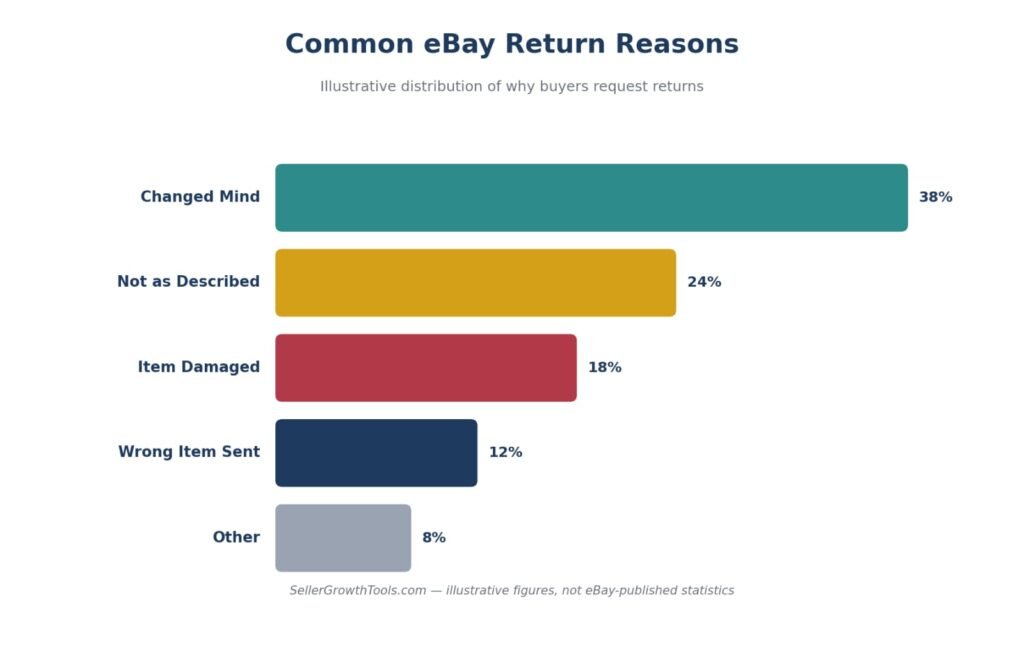
Return Reason Quick Reference
How eBay Returns Work
Return Timeframes
Items That Usually Can’t Be Returned
Buyer vs Seller Responsibility
Return Shipping Costs
Who Pays Return Shipping?
eBay Refund Process
Partial Refunds
No Returns Policy Explained
International Returns
Common Return Problems
Tips to Reduce Returns
Frequently Asked Questions
Related Guides
Every eBay seller deals with returns eventually — the question is whether you’re prepared for them or scrambling to figure out the rules mid-dispute. Who pays for return shipping, when a “No Returns” policy actually protects you, and how partial refunds work all have specific answers that most sellers only learn the hard way.
This guide walks through exactly how eBay returns and refunds work, so you know what to expect before a return request lands in your inbox.
What Is eBay’s Returns Policy?
Overview
eBay’s returns system lets buyers request to send an item back within a set window after purchase, triggering a refund once the return is processed. Sellers set their own return policy (return window and who pays shipping) within eBay’s rules, but eBay’s own Money Back Guarantee sits on top of that policy as a baseline protection for buyers.
Why eBay Returns Exist
Returns exist to keep buyer trust in the marketplace — without a reliable returns system, buyers would be far more hesitant to purchase from sellers they’ve never dealt with before, which would hurt sales across the board.
Seller Protection
Sellers aren’t left without recourse — eBay provides protection against clearly fraudulent or abusive return claims, and sellers can appeal or provide evidence when a return doesn’t match the buyer’s stated reason.
eBay Returns Reason Quick Reference
| Return Reason | Who Pays Return Shipping? | Refund Eligible? |
|---|---|---|
| Changed Mind | Usually Buyer | Yes |
| Wrong Item Sent | Seller | Yes |
| Item Damaged | Seller | Yes |
| Not as Described | Seller | Yes |
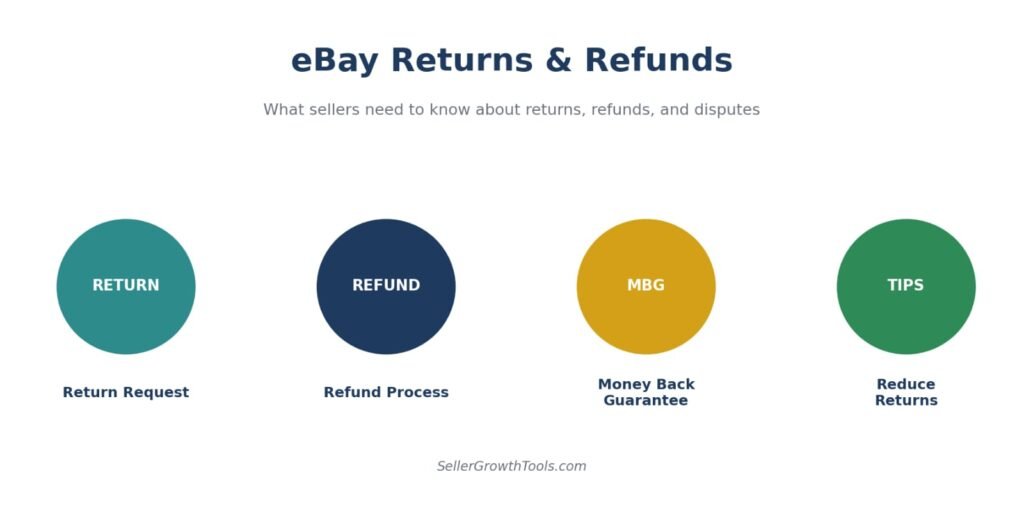
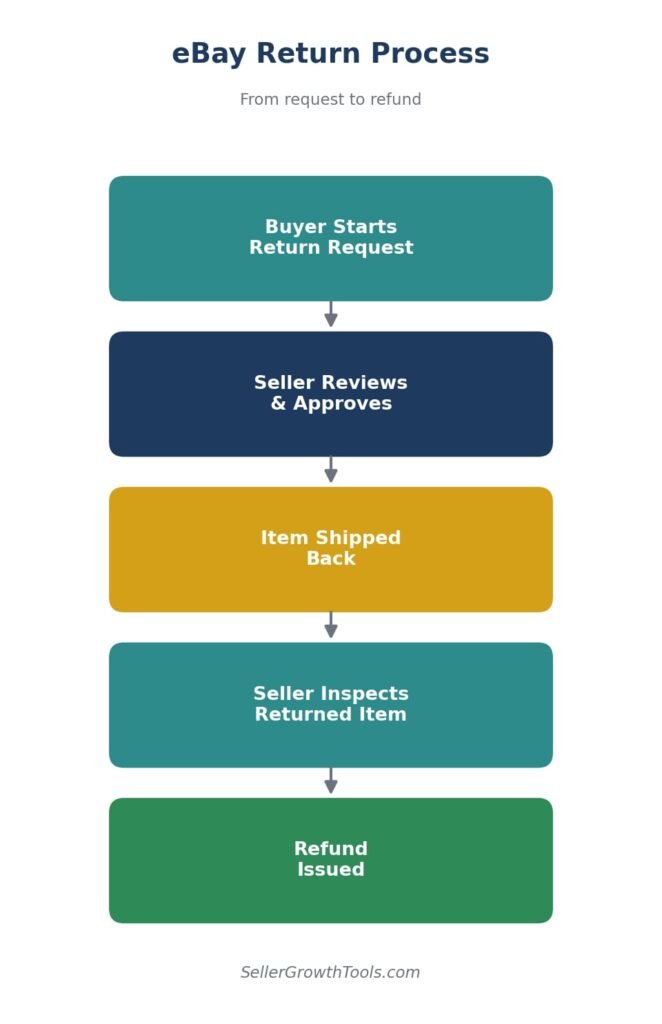
How eBay Returns Work
Buyer Starts a Request
The buyer opens a return request through their Purchase History, selecting a reason (changed mind, damaged, wrong item, not as described, etc.).
H3: Seller Reviews the Request
The seller has a window to review and respond — accepting the return, offering a replacement or partial refund, or escalating if the reason seems inaccurate.
Item Returned
Once approved, the buyer ships the item back, usually with a return label provided depending on who’s responsible for shipping cost.
Refund Issued
After the seller confirms receipt (or the return is auto-processed after tracking confirms delivery), the refund is issued back to the buyer’s original payment method.
eBay Returns Timeframes
Standard eBay Returns Window
Most sellers set a standard return window that applies to the majority of their listings — this is the default period buyers have to request a return after delivery.
30-Day Returns
A common middle-ground option many sellers choose, balancing buyer confidence against how long items stay “returnable” in your workflow.
60-Day Returns
A longer window that can boost buyer trust and conversion, often used by sellers with lower-risk, easy-to-resell inventory.
Category Exceptions
Some categories carry different rules or expectations around return windows regardless of what a seller sets — always check current category-specific guidance before assuming a blanket policy applies everywhere in your inventory.
Items That Usually Can’t Be Returned
Certain types of items are commonly excluded from standard returns, though exceptions vary by category and by eBay’s own policies — always verify current rules for your specific category rather than assuming:
Digital products (once delivered/accessed)
Personalized or custom-made items
Perishable goods
Certain sealed products, where opening the seal affects resale
Note: These exclusions are general patterns, not guarantees — category rules and eBay’s Money Back Guarantee can still create exceptions, so treat this as a starting point rather than a fixed rule.
Buyer vs Seller Responsibility
| Return Reason | Typically Responsible |
|---|---|
| Changed Mind | Buyer |
| Item Damaged | Seller |
| Wrong Item Received | Seller |
| Item Not as Described | Seller |
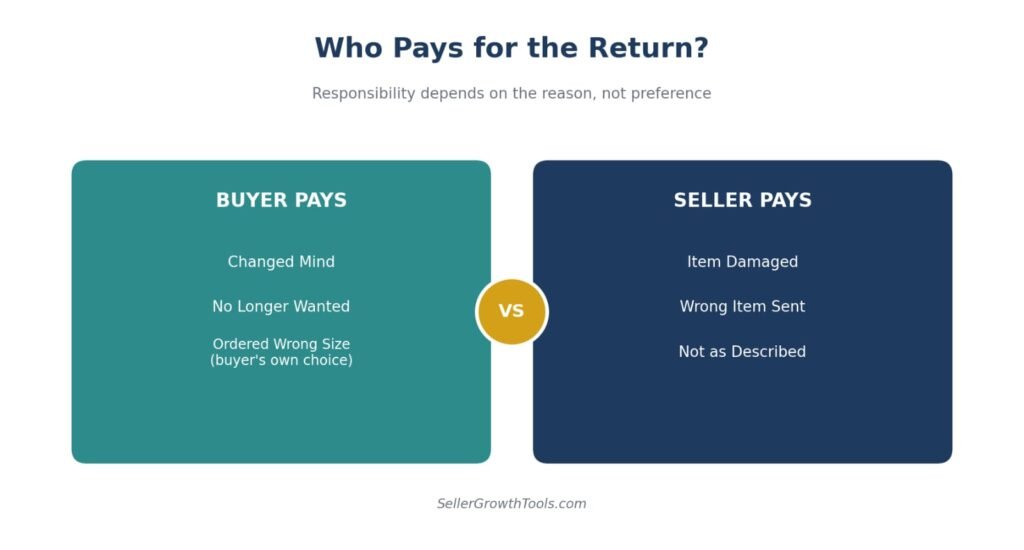
The pattern here matters: if the issue traces back to something the seller did (wrong item, inaccurate listing, damage in transit due to poor packaging), the seller typically covers the cost. If the buyer simply changed their mind, that cost usually falls on them.
Return Shipping Costs
Return shipping cost depends entirely on the reason for the return and the seller’s stated return policy. A buyer-paid return keeps costs low for sellers on “changed mind” cases, while seller-paid returns apply when the seller’s error caused the return. For a full breakdown of how shipping cost interacts with eBay’s fees generally, see our eBay Shipping Costs guide, or eBay’s own Returns Help page for official policy details.
Buyer-Paid Shipping
Applies mainly to “changed mind” returns where the seller did nothing wrong — the buyer covers the cost of shipping the item back.
H3: Seller-Paid Shipping
Applies when the return reason is the seller’s responsibility (damaged, wrong item, not as described) — eBay generally expects the seller to cover this cost.
International Return Shipping
International returns add real cost and complexity — customs forms, higher shipping rates, and longer transit times all apply on top of whichever party is responsible for the base shipping cost.
Who Pays Return Shipping?
Different Scenarios
As covered above, responsibility tracks the return reason — not personal preference from either party.
Buyer Responsibility
Buyer-initiated, no-fault returns (simply changed their mind, ordered the wrong size themselves, no longer want the item) typically place shipping cost on the buyer.
Seller Responsibility
Any return tied to a seller error — inaccurate description, item arrived damaged due to poor packaging, wrong item shipped — typically places shipping cost on the seller.
eBay Money Back Guarantee
eBay’s Money Back Guarantee protects buyers when an item doesn’t arrive, arrives damaged, or is significantly not as described — and it can apply even if the seller has a “No Returns” policy set. This is one of the most misunderstood parts of eBay’s return system, covered in more detail below.
Warning Box
A “No Returns” policy does not override eBay’s Money Back Guarantee. If a buyer claims an item was significantly not as described, eBay can still require a refund regardless of your stated return policy.
eBay Refund Process
Timeline
Once a return is approved and the item is shipped back, refunds are typically issued within a short window after the seller confirms receipt or after tracking confirms delivery.
Inspection
Sellers generally have the opportunity to inspect a returned item before confirming the refund, and can flag issues (item not returned in original condition, missing parts) if something doesn’t match what was sent.
Refund Methods
Refunds go back to the buyer’s original payment method used at checkout — there’s no separate refund method selection involved.
Processing Time
Once issued, the refund typically reaches the buyer within a few business days, similar to standard Managed Payments processing timelines — see our eBay Managed Payments guide for how refunds interact with your payout balance.
Partial Refunds
When Allowed
Partial refunds are useful when a full return isn’t necessary — for example, a minor issue the buyer is willing to keep the item over, in exchange for a partial cost reduction instead of shipping it all the way back.
Requirements
Both parties typically need to agree to a partial refund amount; it’s not something a seller can force in place of a return the buyer is entitled to under Money Back Guarantee.
Examples
A buyer receives an item with a small cosmetic flaw not mentioned in the listing but still usable — the seller offers a 15% partial refund instead of processing a full return, and the buyer accepts and keeps the item.
No Returns Policy Explained
What “No Returns” Actually Means
A “No Returns” policy stops buyers from returning an item simply because they changed their mind — it does not mean a seller is fully shielded from every possible return.
Exceptions
Items that are damaged, significantly not as described, or never arrived can still trigger a required refund under Money Back Guarantee, regardless of the seller’s return policy setting.
Buyer Protection
eBay designs this overlap intentionally — return policies control buyer’s-remorse returns, while Money Back Guarantee protects buyers against seller error or fraud, and the two operate on separate tracks.
Official Reference: eBay Money Back Guarantee Policy — (verify this URL before publishing, as eBay restructures help pages periodically).
International Returns
Shipping Costs
International returns typically cost significantly more than domestic ones, and responsibility still follows the same buyer-vs-seller logic based on the return reason.
Customs
Returned international packages may require customs documentation just like the original shipment did, which can slow the process down.
Delays
International returns generally take longer to process end-to-end due to customs handling and longer transit times in both directions.
Best Practices
Factor potential international return costs into your pricing for cross-border sales, and communicate clearly with international buyers about the return process before disputes arise.
Common Return Problems
Buyer Abuse
Occasionally a buyer files a return under a false reason (claiming “damaged” to avoid paying return shipping on a changed-mind return) — sellers can dispute this with eBay if evidence supports it.
Missing Items
Returned packages sometimes arrive missing accessories or parts that were included in the original sale — document the original contents clearly to have a basis for disputing an incomplete return.
Damaged Returns
Items sometimes come back damaged in a way they weren’t when shipped — photograph returned items on arrival to have evidence if you need to dispute the refund amount.
Late Returns
Buyers occasionally return items outside the stated return window — sellers can decline these, though eBay’s Money Back Guarantee cases operate on separate timelines from standard return windows.
Refund Delays
Delays are usually tied to inspection time, unclear tracking, or a dispute over the item’s condition — clear communication with the buyer generally resolves these faster than letting them escalate.
Tips to Reduce Returns
Use accurate, well-lit photos that show the actual item, not stock images
Write detailed descriptions that call out flaws, wear, or condition issues upfront
Provide correct sizing information and measurements for apparel and similar items
Package items securely to prevent damage in transit
Respond to buyer questions quickly before the sale to prevent mismatched expectations.
CTA
Want to understand how returns, shipping costs, and eBay fees affect your profit? Try our eBay Fee Calculator, eBay ROI Calculator, and eBay Shipping Costs Guide before listing your next product.
Know Your Numbers Before You List
Factor in fees, shipping and return costs with our free calculators and guides.
eBay Fee Calculator eBay ROI Calculator eBay Shipping Costs GuideFrequently Asked Questions
Can buyers return any item?
Not necessarily — return eligibility depends on the seller’s stated return policy and the reason for the return, though Money Back Guarantee provides a baseline of buyer protection regardless of that policy.
How long do returns take?
From request to refund, the process typically takes anywhere from several days to a couple of weeks, depending on shipping time and how quickly the seller confirms receipt.
Who pays shipping?
It depends on the return reason — buyers usually pay for changed-mind returns, while sellers typically pay when the return stems from their own error.
Can sellers refuse returns?
Sellers can decline returns that fall outside their stated policy or return window, but can’t refuse returns that qualify under eBay’s Money Back Guarantee.
What happens if a buyer damages an item?
If a buyer damages an item during their own use before returning it, the seller can raise this during inspection and may be able to issue a reduced refund rather than a full one.
Can a seller offer a partial refund?
Yes — partial refunds are a common alternative to a full return when both buyer and seller agree it resolves the issue without shipping the item back.
Related Guides
A case eBay closes for you becomes a defect. A case you resolve doesn’t.
Most negatives start with a return that was handled badly.
Who pays return postage, and when you’re obliged to cover it.
Work out what a refund actually costs you once fees are accounted for.
Where repeated unresolved cases eventually take your account.
Conclusion
Returns are simply part of selling on eBay — the sellers who handle them well aren’t the ones who avoid returns entirely, they’re the ones who understand the rules well enough to respond quickly and correctly. Knowing who’s responsible for return shipping, when Money Back Guarantee applies despite your return policy, and how partial refunds can resolve smaller issues will save you time, money, and disputes down the line.
Author Box
Written by Muhammad Usman
eCommerce & SEO Specialist with 5+ years of experience in eBay, Amazon, Etsy and TikTok Shop. This guide is based on official eBay documentation and practical seller experience.
Fact-Checked Box
This guide has been reviewed against official eBay Seller documentation and updated for 2026. Return windows, Money Back Guarantee terms and shipping responsibility may vary by marketplace and item category.